The most common joint problems in dogs – causes, processes, and professional background
Among musculoskeletal disorders in dogs, joint problems are of paramount importance, as they not only affect mobility but also directly impact quality of life, comfort, and long-term health. In veterinary practice, one of the most frequently diagnosed chronic conditions is various forms of joint degeneration, which often begin at a young age, while clinical symptoms only become clear later.
The development of joint diseases is a complex process where genetic predisposition, mechanical stress, and inflammatory mechanisms interact to shape the course of the disease.
Osteoarthritis – the most common joint condition
Osteoarthritis (OA) is a chronic, progressive degenerative disease in which the structure of the articular cartilage gradually deteriorates. The cartilage loses its elasticity, its load-bearing capacity decreases, and the quality of the synovial fluid also deteriorates.
As the process progresses, the cartilage thins and can partially or completely disappear, leading to direct contact between bone surfaces. This results in pain, inflammation, and the formation of bone spurs, ultimately leading to restricted movement.
The role of developmental disorders and injuries
Joint wear often develops secondarily. In cases of hip and elbow dysplasia, the joint surfaces do not fit together properly, causing instability and accelerating cartilage damage in the long run.
A similar mechanism is observed in injuries. Cruciate ligament rupture or patellar luxation alters the joint's biomechanics, leading to increased stress and faster degeneration.
A new approach to underlying causes: it's not just the joint that matters
Modern musculoskeletal perspectives increasingly look beyond the joint as an isolated structure. More and more clinical experience and functional approaches indicate that joint problems often do not originate from the joint itself, but from the condition of the surrounding tissues.
The fascia – the connective tissue system that weaves throughout the entire body – plays a key role in the quality of movement. If this system becomes tense and dehydrated, tissue elasticity decreases, power transmission worsens, and the load on the joints becomes uneven.
In parallel, the condition of ligaments and tendons is also crucial. If these structures are not strong enough or do not regenerate properly, joint stability decreases. An unstable joint is always subjected to greater mechanical stress.
Due to uneven or compensated loading, the joints are subjected to greater stress than necessary. As a result, the joints gradually become overloaded, cartilage wear accelerates, and inflammatory processes develop more easily. In the long term, this leads to restricted movement, pain, and decreased performance.
Classic risk factors – undiminished importance
In addition to all this, well-known risk factors remain significant.
Genetic predisposition plays a particularly significant role in certain orthopedic conditions. Overweight is one of the most important modifiable factors, causing not only mechanical overload but also intensifying inflammatory processes.
As age progresses, the cartilage's regenerative capacity decreases, while improper loading – especially in young age – can damage joint structures in the long term.
Complex support: beyond symptomatic treatment
The treatment of joint problems today can no longer be limited solely to pain relief or inflammation reduction. The real solution lies in supporting the entire musculoskeletal system.
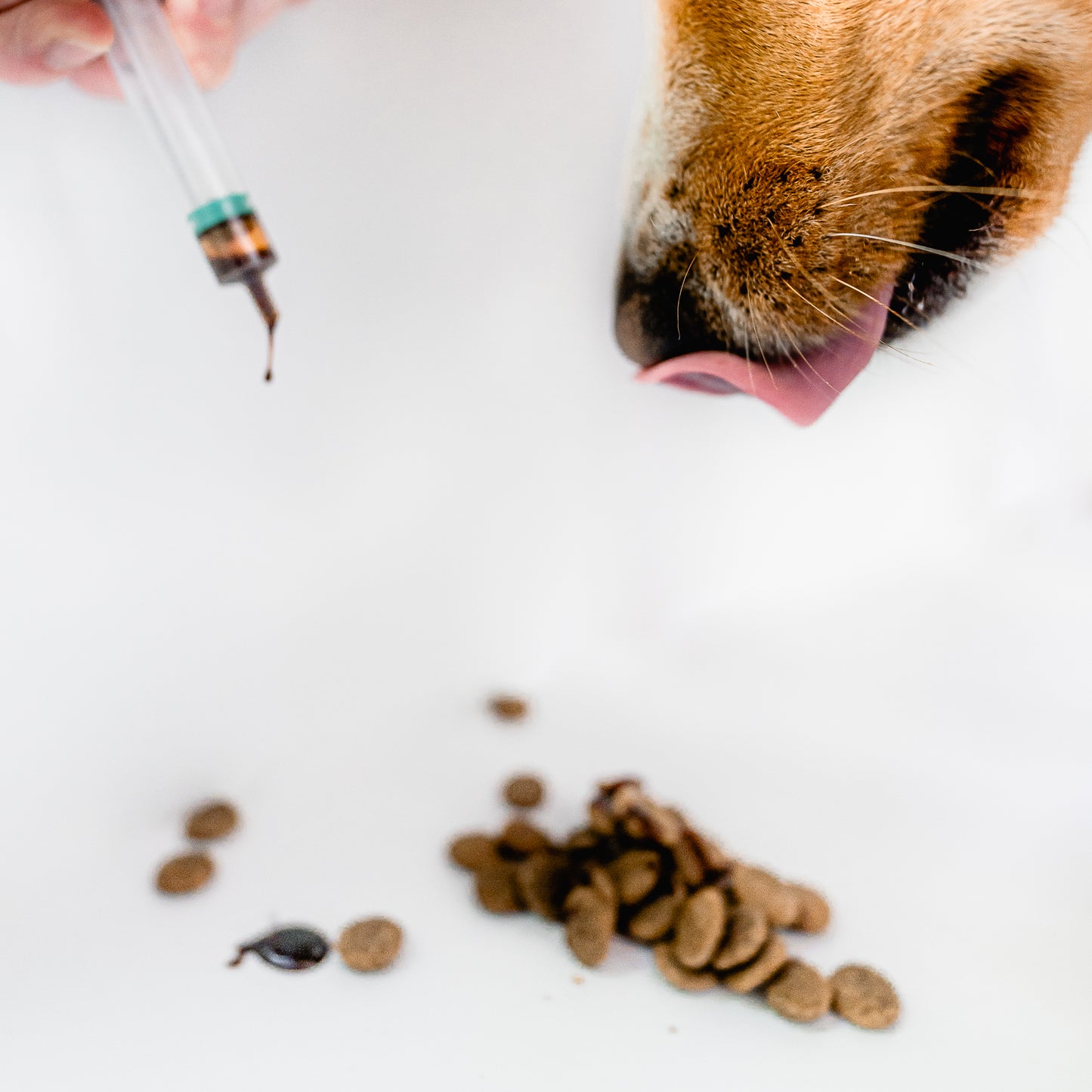
This complex approach includes Joint Pro, which supports joint health on multiple levels. It not only affects cartilage metabolism but also contributes to improving the condition of connective tissues and fascia. Additionally, it aids the proper functioning of structures that stabilize the joints – such as ligaments and tendons.
Through structural support, load distribution can improve, reducing excessive mechanical stress on the joints. This means that the approach aims not only to alleviate symptoms but also to address the underlying causes.
Conclusion
Joint problems in dogs are the result of complex, multifactorial processes. Although the endpoint is often osteoarthritis, numerous structural and functional abnormalities can lie in the background.
The modern functional approach clearly indicates that joint health must be approached systemically. The joint itself cannot be understood without considering the condition of the surrounding tissues – fascia, ligaments, muscles.
Therefore, the key to a long-term solution is complex support that not only treats symptoms but also addresses the underlying mechanisms.